

Shenzhen is one of the best cities in China to eat real Cantonese food. It sits in the heart of Guangdong province, the cuisine’s home, and the local dining scene runs from quick roast-meat counters to polished dim-sum halls. For a visitor, the food is excellent, cheap, and easier to access than you might expect — once you know a few basics.
Start with Cantonese roast meat
The single dish that defines everyday Cantonese eating here is roast meat — crispy-skin roast pork, char siu, and roast goose, chopped over rice. It is fast, inexpensive, and served everywhere.
- Char siu rice (叉烧饭): sweet barbecued pork over rice — a safe, delicious first order.
- Roast goose (烧鹅): a Guangdong specialty; crisp skin, juicy meat.
- Roast pork belly (烧肉): crackling skin, often ordered as a combination plate.
Order at the counter, point at what you want, and pay by phone. No English menu needed.
Dim sum, for a sit-down meal
For a longer meal, dim sum is the classic Cantonese experience — small steamed dishes wheeled or ordered to your table. Shenzhen has both traditional teahouse-style places and modern chains.
- Har gow (虾饺): translucent shrimp dumplings — the benchmark of any dim sum kitchen.
- Siomai (烧卖): open-topped pork and shrimp dumplings.
- Char siu bao (叉烧包): fluffy steamed buns filled with sweet roast pork.
- Changfen (肠粉): silky rice-noodle rolls, often with shrimp or beef.
Many dim sum restaurants in malls have picture menus, so you can order without reading Chinese.
Seafood, done the Guangdong way
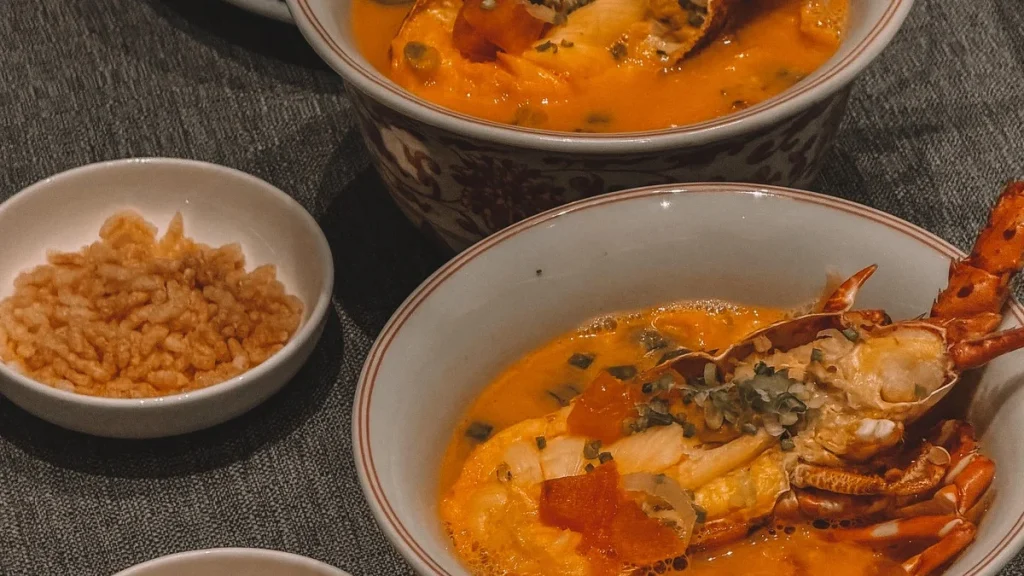
Cantonese seafood is about freshness and light seasoning — steamed fish with ginger and scallion, live seafood chosen from a tank. The point is to taste the ingredient, not a heavy sauce.
- Steamed whole fish with soy and scallion — the signature dish.
- Stir-fried clams with black bean sauce.
- Live shrimp, often briefly boiled and dipped in soy.
Ordering without reading Chinese
This is the part that worries visitors most. In practice it is manageable. If you cannot read Chinese menus yet, read our guide to eating in Shenzhen without reading Chinese for the full method.
- Look for picture menus or food photos on the wall — common in roast-meat and dim-sum spots.
- Point at what another table is eating; staff are used to it.
- Use a translation app to photograph the menu.
Dining habits that trip up first-timers
- Sharing is normal: dishes arrive for the table; order several and share. Solo diners can still order one or two dishes.
- Tea comes first: you will be asked which tea; it is part of the meal, not optional.
- Pay by phone: have WeChat Pay or Alipay ready — see our payment guide for foreigners.
- No tipping: service is included; tipping is not expected in Shenzhen.
FAQ
Is Cantonese food spicy?
No. Cantonese cuisine is known for mild, fresh, lightly seasoned flavors that highlight the ingredient. If you want heat, that is a different regional cuisine.
Can I eat Cantonese food alone?
Yes. Roast-meat rice plates and noodle bowls are built for one. Dim sum is more of a shared-table meal but small groups or solo diners are fine.
How much does a meal cost?
A roast-meat rice plate costs a few dollars. A sit-down dim sum meal is more but still affordable by international standards.
Want the best tables handled for you?
If finding the right restaurants, reading menus, and ordering feel like work, a local guide knows the kitchens worth your time and handles every step. See our services, then request a quote or chat on WhatsApp.