
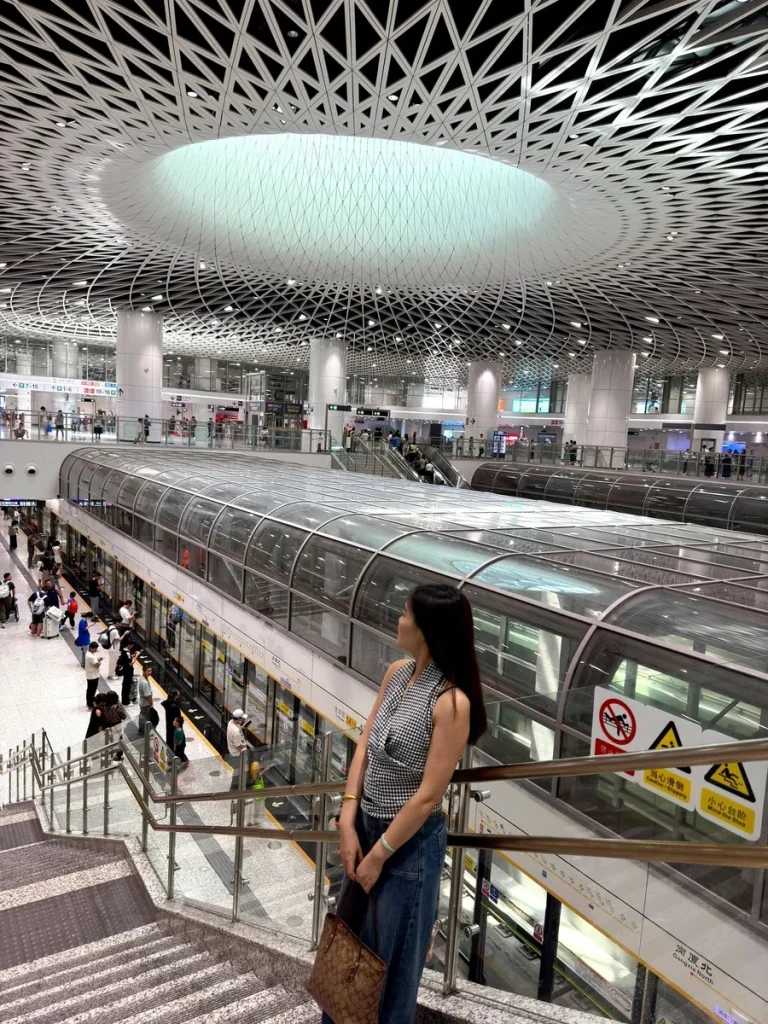

The Shenzhen subway system is one of the cleanest and most efficient transit networks in the world, but it comes with a few strict local rules. First-time foreign visitors are often caught off guard by the mandatory security checks, the total lack of English announcements at some stations, and the deeply ingrained queuing culture. Understanding these unwritten rules before you arrive will save you time and help you blend in with the local commuters.
Strict Security Checks at Every Entrance
Unlike many subway systems around the world, you cannot simply walk straight to the platforms. Every single station entrance in Shenzhen is equipped with an X-ray scanner, and security staff will require you to put your bags through the machine. Here is what you need to keep in mind:
- Have your bags ready to place on the conveyor belt as soon as you approach the tables.
- Avoid carrying large liquids, aerosols, or sharp objects like pocket knives, as they will be confiscated.
- If you have a water bottle, the security guard may politely ask you to take a sip in front of them to prove it is just water.
Payment Requires Local Apps
While the ticket machines look modern, many only accept Chinese payment methods, which can be frustrating if you just arrived in the country. You will rarely see traditional paper tickets anymore, as the city has transitioned heavily toward digital QR codes.
To avoid getting stuck at the turnstiles, it is best to sort out your digital payments beforehand. You can read our comprehensive guide on how to pay in Shenzhen as a foreigner to link your international credit card to the local transit apps before your trip.
The Unspoken Rules of Escalators and Standing
Shenzhen commuters take transit etiquette very seriously, and stepping out of line will usually result in a gentle but firm correction from the station staff or local passengers. Stand strictly on the right side of the escalator, leaving the left side open for people walking up or down in a hurry. Additionally, wait for passengers to exit the train cars entirely before you step aboard, and always form a neat line behind the designated floor markings on the platform.
Language Barriers Inside the Train
The trains are modern and comfortable, but you need to pay close attention to your surroundings. While digital display boards inside the carriages alternate between Chinese characters and English, the audio announcements are sometimes only in Mandarin. Count your stops carefully or use your phone’s map GPS to track your real-time location underground.
Connectivity and Crowd Management
Shenzhen moves millions of people daily, and the rush hour crowds are incredibly dense. Here is how to handle the peak times like a professional:
- Avoid traveling between 5:30 PM and 7:00 PM on weekdays if you have large luggage with you.
- Let people behind you know if you need to exit the train by saying “excuse me” or lightly tapping their shoulder.
- Download an offline map of the city beforehand, as mobile data signals can occasionally drop between stations deep underground.
Frequently Asked Questions
Is the Shenzhen metro safe for foreign tourists?
Yes, the network is exceptionally safe, heavily monitored by cameras, and staffed with attendants at almost every level of the station. You can learn more about general safety by reading our post about whether Shenzhen is safe for foreign tourists.
What are the operating hours?
The first trains usually start running around 6:30 AM, and the last trains depart shortly after 11:00 PM. Exact times vary slightly depending on the specific line and station.
Can I buy a single journey ticket with cash?
Some ticket machines accept small cash notes, but they are becoming increasingly rare. Using a digital transit QR code or a tourist day pass is highly recommended.
Navigating a massive transit system in a new country can be overwhelming, especially if you do not speak the language. If you want to skip the learning curve and explore the city with ease, consider booking a local expert. Reach out to us through our contact page or check out our private guide services to make your visit to Shenzhen completely stress-free.